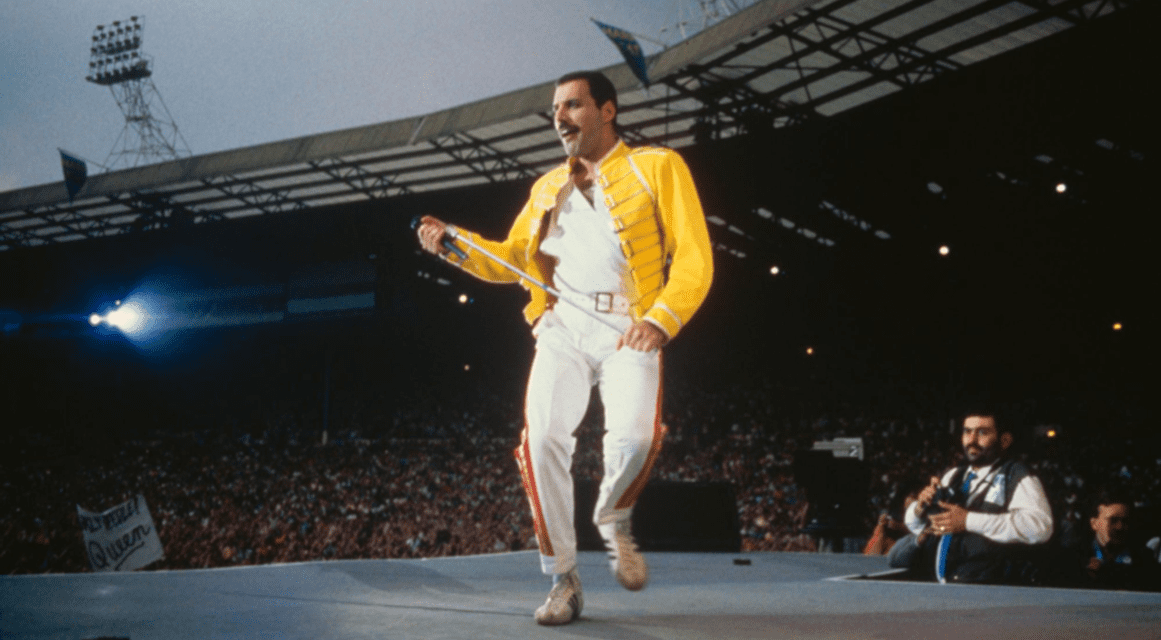
Few live performances in rock history have achieved quite the same legendary status as Queen’s Wembley Stadium concerts in July 1986. Now, four decades on, the image of Freddie Mercury striding across the vast stage in his famous yellow military jacket remains one of the defining pictures of stadium rock.
The shows formed part of the band’s Magic Tour, their final tour with Mercury, and represented the moment when Queen’s immense popularity translated into a spectacle of truly historic proportions. Across two nights at the iconic Wembley Stadium, more than 140,000 fans packed into the venue to witness a performance that many still regard as one of the greatest live rock concerts ever staged.
Formed in London in 1970, Queen had spent the previous decade-and-a-half building a catalogue of anthems that blended operatic ambition with stadium-sized hooks. The likes of Bohemian Rhapsody, We Will Rock You and Radio Ga Ga and countless others had cemented their reputation for theatricality and musical daring, yet it was their live performances, driven by the magnetic presence of their legendary talisman, that truly elevated them into a league of their own.
The Wembley shows captured the band at what many fans regard as the peak of their powers, with Freddie Mercury’s famous call-and-response exchanges with the audience becoming moments of shared electricity, transforming a football stadium into something resembling a communal choir.
Behind him, the band were equally formidable. Brian May’s soaring guitar lines, Roger Taylor’s thunderous drumming and John Deacon’s understated bass provided the powerful musical backbone that allowed Mercury’s showmanship to flourish.
And yet, just over five years later Mercury had passed away, succumbing to bronchial pneumonia resulting from AIDS. However, the music, and the legacy of both the band and that iconic summer, live on..