
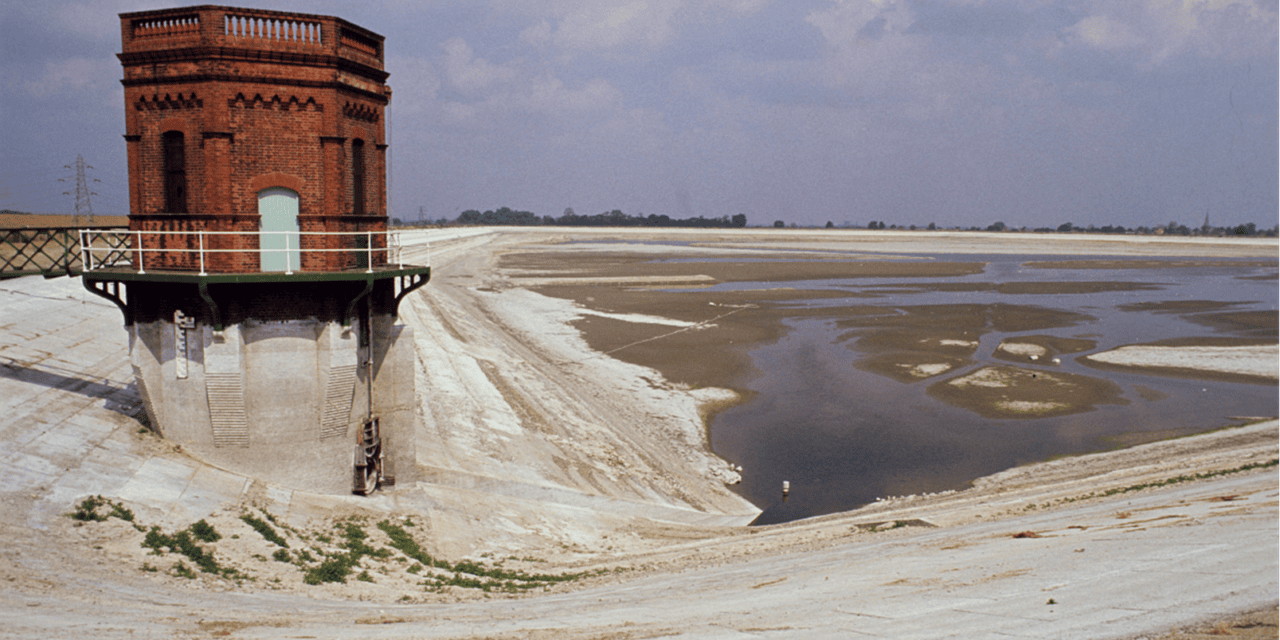
The reservoir runs dry at Sywell Country Park in Northamptonshire; a fitting reflection of an extraordinary British summer, with a heatwave so intense that, half a century later, people still talk about it with a mixture of nostalgia, disbelief and exhaustion.
The photograph became one of thousands of visual reminders of a period that pushed Britain to extremes rarely seen before or since.
The drought began after an exceptionally dry winter and spring, but by June and July the situation had become severe. Week after week of relentless sunshine and soaring temperatures baked the country. Reservoirs, such as that at Sywell, emptied, rivers shrank dramatically, crops failed and water shortages became a national concern. In many areas, standpipes were introduced, hosepipe bans became widespread, and households were urged to conserve every possible drop.
The summer also produced one of Britain’s most memorable political appointments: Denis Howell, nicknamed the ‘Minister for Drought’, who was tasked with coordinating the national response.
Ironically, rain reportedly followed shortly after his appointment, adding another layer to the folklore surrounding the summer.
For many who lived through the 35°C temperatures, the memories remain vivid. Lawns turned brown for months, roads softened in the heat, schools struggled in sweltering classrooms, while families flocked to beaches, parks and open water wherever they could find relief.
What actually makes the summer of 1976 particularly enduring is that it has become a benchmark against which every subsequent heatwave is measured. Nearly every prolonged spell of hot weather still prompts the same phrase: “It’s not quite 1976” and, thankfully, it isn’t!