Albert Einstein wrote in 1950, “every life form is connected, and humans delude themselves if they fail to embrace all living creatures and the whole of nature.” To embrace other forms of life on our precious planet, we need to understand them, and how we are all part of one big living community and that we need one another.
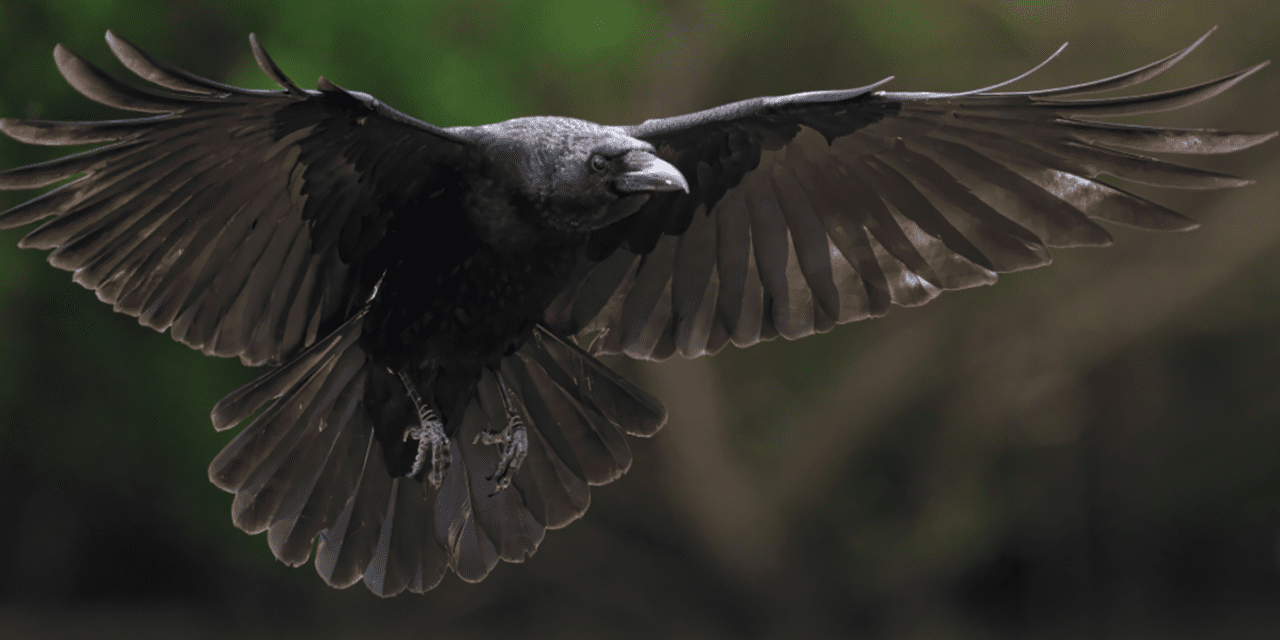
One creature, often unappreciated for all it does, is the very beautiful, jet-black carrion crow. We may notice them as they stride across our lawns cautiously assessing their safety. But, how often have we given much thought to what they do for us all?
Crows are our “Clean-up Crew”, rapidly eating the carcasses of dead animals, which prevents the spread of serious diseases. A single crow family can consume around 40,000 insects, ants, slugs, mice, chafer grubs, leatherjackets, and caterpillars in one single nesting season! A boon for farmers and gardeners alike.
Crows reforest areas with trees by burying nuts for future consumption, but often left, these grow future trees!
They have incredibly high intelligence, similar to apes, often compared to that of a seven-year-old child! They are capable of advanced problem solving and learning from older crows. Seeking water in a tube too long for the water to be reached, they have been observed dropping stones into the tube until the water level has risen such that they can drink! One observation in the UK showed a group of crows taking turns to lift a bin lid, while companions collected food!
Crows will make, use and adapt tools, plan, and have incredible memories. They remember individual human faces for life (10 to 15 years), teaching their young which of us is safe and which is not to be trusted! Such high intelligence, in such a relatively small skull, is thought to be because the neurons in their smaller brains evolved to be far denser than ours.
Crows are very sociable and pair for life, building nests and caring for their young with their partners, and older siblings. Young crows have been observed playing games like follow my leader and sliding on smooth surfaces! On a winter’s night, they gather, often in trees, for protection and warmth. At dawn they spread out to seek food, sometimes up to 20 miles away.
To protect our shared planet, we need to understand and respect our fellow creatures!