
Carved through 36 miles of Lancashire and Cheshire clay, the Manchester Ship Canal was one of the boldest feats of Victorian engineering – in essence, a waterway that would turn a landlocked industrial city into a seaport.
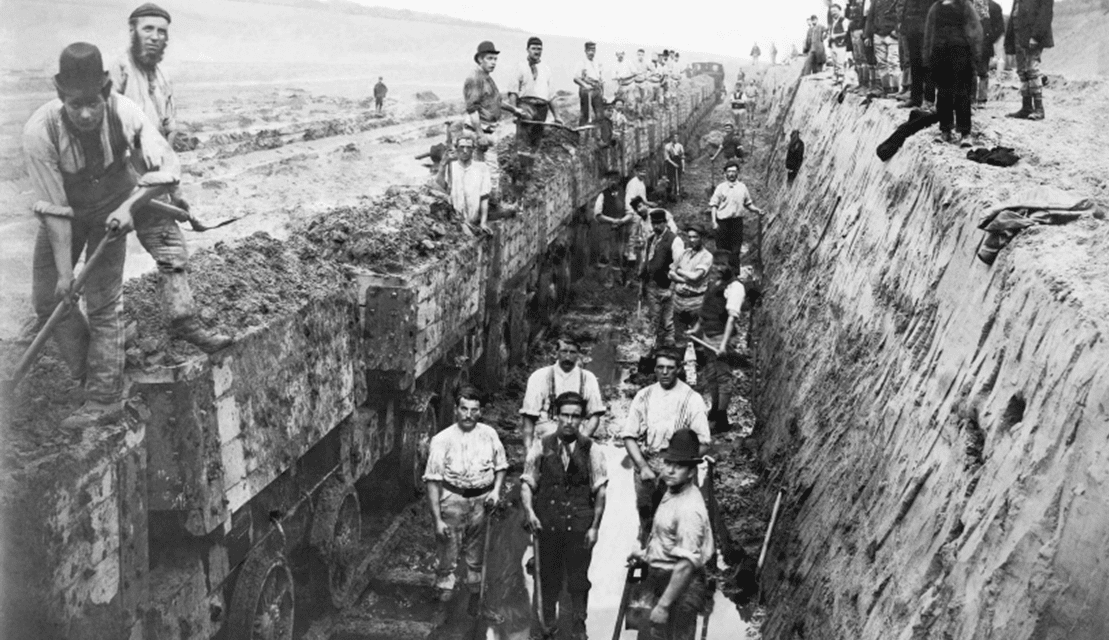
This 1889 photograph captures the back-breaking reality behind that ambition: gangs of labourers, or ‘navvies’, working by hand to dig the vast cuttings that would one day carry ocean-going vessels from the Mersey to Manchester.
The canal’s construction began in 1887 and employed more than 16,000 men at its peak. Working in gangs with picks, shovels and wooden barrows, they shifted millions of tons of earth. Temporary rail lines, like the one seen here, hauled spoil away in wagons drawn by steam locomotives, and before long the landscape connecting this great city was changed forever.
It wasn’t all good, though. Wages were modest, conditions brutal, and accidents frequent. The work was relentless – digging, draining, blasting through rock, and constantly battling water and mud.
It took six years to complete the canal, which opened in January 1894. Stretching from Eastham, near Ellesmere Port, to Salford Docks, it was hailed as the eighth wonder of the world. And sure enough, the project transformed Manchester’s fortunes, giving the city direct access to global trade and independence from Liverpool’s docks.
Looking at this image today, it’s impossible not to admire the scale of the effort, nor should we forget the estimated one thousand men who lost their lives during this incredible construction effort.