
The issue of slavery was brought rudely to the attention of the public recently by the toppling of the statue of the slave trader Edward Colston by protestors in Bristol. Whether to be consistent these same people should have gone on to demolish half the buildings in and around the Bristol docks – which themselves were built by the profits of the slave trade – appears not to have arisen. No, from then on statues became the big deal – Robert Milligan soon followed Colston into ignominy – and any historical character found to have certain questionable links or views (which is most of them) was in danger of being jerked off his plinth.
Just whether the whole scale demolition of our history actually rights the wrongs of the past is a moot point. After all, where do we stop? For example, Julius Caesar was in charge of a war machine which slaughtered half of Gaul and enslaved the other half; and his nephew, Augustus, ruled over an oppressive empire where up to a third of the inhabitants were slaves. Yet we still honour these men by calling our middle months of the year ‘July’ and ‘August’ respectively. Should we have a rethink and rename them after more worthy people? ‘Harry’ and ‘Meghan’ perhaps?
Or is it better, rather than denuding the landscape, to teach history as it actually was. That means teaching our children not just the horrors of slavery, but also the uncomfortable fact that all people of all races have been involved in it throughout history. And the fact that great men and women whose memory we honour – people like Churchill, Nelson, Elizabeth 1 and Oliver Cromwell – often had a dark side to their character. Indeed it was Cromwell who himself said, “Paint my picture, warts and all!”
The other thing is to realise that while pulling down statues might give us a feeling of virtue, it doesn’t actually change much in our world today. Like the sad fact that in the 21st century slavery is as much of a problem as it ever was. As the charity ‘Hope for Justice’ tells us, no less than 40.3 million people today are in forced labour, sexual exploitation, domestic servitude and forced marriage worldwide.
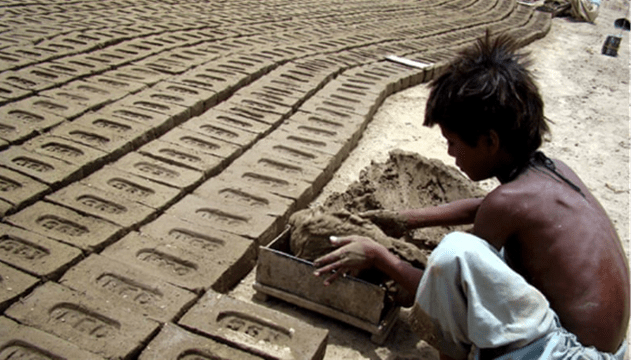
We might rightly recoil – as I did when I visited the dungeons in Cape Coast, Ghana – at the past horrors of the slave trade. But then look at a picture of a young child working long hours in a brick kiln factory in Pakistan today and you will see that slavery is still very much with us. Oh yes, and even dear old Britain is not exempt. This is something we can do something about and it might just be more worthwhile than toppling statues.
To find out more about modern slavery see www.hopeforjustice.org